Club Champion
1364 verified teaching moments with direct channel credit and official-source links.
 Fit clubs for flight and face-to-path
 Go upright on lie to correct a rightward ball flight
 Diagnose a pull with face-to-path
 Check spin consistency on a heel miss
 Normalize iron specs before comparing heads
 Judge game improvement irons by descent, peak height
 Choose wedge bounce by turf firmness and shaft lean
 Understand why heavier putter heads need a stabler shaft
 Check the path within three degrees in-to-out
 Bridge shaft weights between hybrid and iron
 Don't rely on ball position to hit down on irons
 Match your putter's face rotation to your stroke arc
 Flatten the lie angle to offset a left-crossing curve
 Fix a slice by closing the face to your path
 Try toe weight to stabilize the driver face
- Review one slice pattern: path, face, and loft
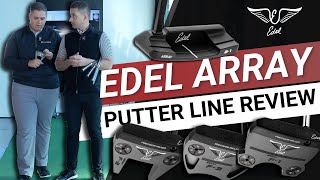 Fit every adjustable part of the putter
 Add a stability shaft to resist putter twisting
 Suspect the golf ball when a club feels off
 Investigate test differences that recur
 Do not equate more ball deformation with more speed
 Consider how turf interaction led one golfer to blades
 Test wedge soles beyond an indoor fairway mat
- Get fit to make your slice lessons easier to apply
 Ramp swing speed up ball by ball
 Choose putter markings for your alignment needs
 Understand how driver curvature offsets toe-strike spin
 Use descent angle as well as spin to stop wedges
 Use four-way camber for versatile face positions
 Don't fit yourself to a ball off the driver
 Narrow your stance to stop swaying
 Expect forward shaft lean to make a wedge dig
- Match the retrofit route to the putter neck
 Track strokes gained to target practice and fitting
 Practice with lower-loft wedges to make the lob easy
 Avoid duplicating a five-wood's fairway distance
 Match sole width to the bounce you want
 Use dispersion as the shaft tiebreaker
 Fit the club to your swing, not the brand
 Use more driver spin for forced carries
 Treat putter-length effects as golfer-specific
 Check neighboring irons before adjusting an outlier
 Diagnose ball flight by strike point, not path guesses
 Aim down the right side if you draw the ball
- Pair very low driver spin with enough height
 Match this player's low-spin irons with a high-spin ball
 Benchmark golf-ball tests against a consistent ball
 Expect higher swing weight to steady gripping down
 Treat tiny ball-test differences as provisional
- Prioritize your ball fit at the wedges
- Expect range numbers to run a bit hot versus on-course
- Combo T150/T200/T350 without managing spin model to model
 Pick a driver shaft by feel, not just the numbers
 Regulate speed with a low-resistance bunker wedge
 Expect higher-toe mass to shift wedge CG toe-ward
- Know why low strikes spin and rob driver distance
- Limit forward spin on slick downhill putts
 Consider the claimed forgiveness from a titanium insert
 Account for strike location before changing driver spin
 Isolate shaft before changing heads
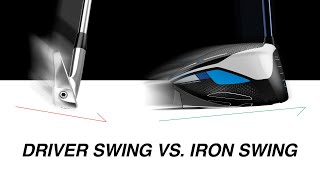 Hit up off the tee, hit down off the ground
 The face governs most of your putt outcome
 Weigh feel against forgiveness in mallet vs blade choice
 Watch shaft lean and deloft on bottom-groove strikes
 Test the i59 a couple grooves low
 Control delivery and launch when testing golf balls
 Use a towel to check arm connection in your putting stroke
 Small head weight shifts swing weight and flight
- Lie angle matters less as loft drops
 Use gravity and angle of descent to stop a lob shot
 Don't over-loft a driver if you add loft at impact
 Compare wedge performance against its cost
 Add driver loft to stop using low loft as a crutch
 Check alignment when a stable putter struggles
 Use graphite to pair low weight with stiffness
 Test your start-line consistency with a chalk line or ruler
 Aim for a 45-48 degree landing angle with a 6 iron
 Calibrate putting data to perceived square
 Understand how open shoulders, closed feet steepen a slice
- Predict strike data before checking the screen
- A toe-hang putter falls open, not shut like a door
 Too little wedge bounce can cause digging and lost spin
 Use a clown-nose ball to present wedge bounce
 Consider an upright driver if you raise the handle
 Track wedge wear after heavy play
 Consider a slimmer-looking design without losing forgiveness
- Validate shot-making feels with launch data
 Push down and toward the ball to go up and away
 Pair ball and putter lines to clarify aim
- Use the bounce as speed comes off near the green
 Pick a vibration-dampening shaft for joint pain
 Compare driver launch and spin beyond ball speed
 Reject distance from a 2,000 rpm knuckler
- Pair forward shaft lean with a rear-CG mallet
- Narrow your iron shortlist before a fitting
- Stop open-face shots with descent, not spin
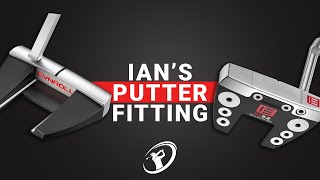 Retest the selected putter to validate performance
- Include look and feel in a club-fitting decision
- Investigate spin loss at an unchanged spec
 Verify a lie-angle setting dynamically