Club Champion
1364 verified teaching moments with direct channel credit and official-source links.
 Understand why draws and fades can peak equally
 Calibrate wedge distances on a launch monitor
 Judge six-irons by stopping power, not carry
 Watch a small spec change double dynamic loft
 Swap balls instead of reshafting to change ball flight
 Aim putt speed about a foot past the hole
 Keep overspeed sessions short with max-effort reps
 Take manufacturer shaft specs with a grain of salt
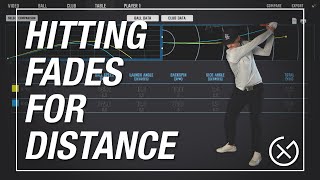 Review the speaker's switch from a draw to a cut
 Fit dynamic delivery beyond static measurements
 Gap clubs so total bleeds into the next carry
 Limit bending on thin-faced strong-steel irons
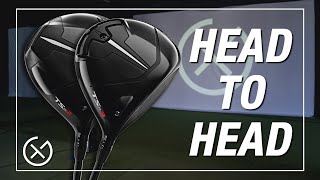 Review choosing a shorter build over chasing distance
 Flight it low: more club, ball back, open body
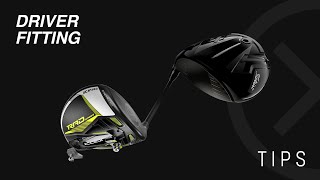 Use tee height to control your driver strike point
 Grip size changes putter face rotation
 Use TZ6 for tip kick with low-torque stability
 Check how driver mishit height changes speed
 Read local stiffness by diameter, not a tip label
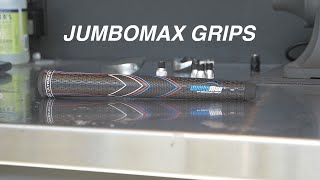 Add contrasting grip sizes to a fitting test
 Check spin stability across driver strike locations
 Check whether indoor spin was measured
 Watch how easily a player performs during a fit
 Tune lie, loft, and CG together
 Pair a firm iron with a soft-compression ball for feel
 Track putter impact ratio for energy consistency
 Choose lie angle from strike and start direction
 Start practice with short shots to ingrain a change
- Aim to be fastest on your first swing of the round
 Play a low spinner from a neutral path
 Match fairway-wood spin to available speed
 Expect high-face driver strikes to lower spin
 Test shafts with data instead of choosing by profile
 Fit low-spin fairway woods for adjustability
 Don't over-trust efficiency ratios across head shapes
- Prioritize a square putter face over forward roll
 Reserve X-flex iron shafts for ~95+ mph iron swing speed
 A swinging-door putter slows face rotation, not adds it
 Match shaft weight to swing speed, not backwards
 Protect set gaps before changing shaft weight
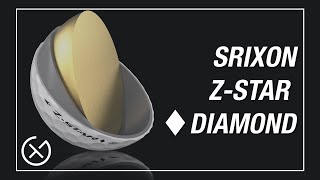 Judge a ball across putter, driver, wedges, and wind
- Retest the fitted driver at the end
- Test a more upright lie for a slingy flip
 Line the ball off the heel on cut pitches
 Recheck loft gaps when blending iron designs
 Try heavier and softer to give yourself feel
 Modern irons need spin to tame unexpected flyers
 Toe hang slows face rotation to fight a pull
 Account for spin loss on wet or rough lies
 Static putter loft won't tell you actual launch
 Consider leading-edge relief if you lean the shaft forward
 Drop loft to get low spin from a high-launch shaft
 Fit putter launch to the green surface
 Compare golf balls by compression and spin profile
 Ask your fitter to equalize lofts when comparing irons
 A 48-50 degree landing angle holds greens
 Fit a wedge shaft for off-speed flight
 A 10-degree wedge-loft gap
 Consider 15-20 banded takeaways before hitting balls
- Compare graphite balance point, not weight alone
 Review the speaker's felt right-elbow-down position
 Test shaft effects on dynamic lie
 Why one-length long irons need different head engineering
 Stand on a slope to preset lead-side weight
- Play a fade as your stock shot, draw for distance
- Soft carbon steel irons bend easily for fitting
 Adapt setup to the mobility you have
 Bracket a club fit before fine-tuning
 Step back slightly to free the putter path
- Use gear effect to read heel and toe driver misses
- Use rotation and passive hands to control a block-hook
- Train speed at max effort until your heart rate climbs
- Shorten the target when testing a shorter held club
- Read driver spin together with strike height
- Build combo sets around strike variability
 Bracket fairway-wood fitting with an extreme
 Reset with above-and-below Galvin cues
 Vary pace, not swing length, for wedge distance
- Stop chopping and changing putters; commit to one that fits
- Get your loft and lie checked twice a year
 Build wedge lofts from the pitching wedge
 Test golf balls at matched launch and speed
- Use carry numbers to remove course hazards
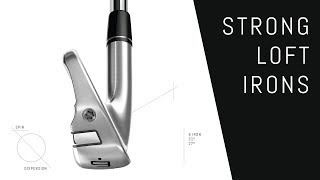 Balance iron distance against miss control
- Treat grip choice as part of your fitting
 Check shaft points at or inside the ball at arm parallel
 Avoid combining an open face with toe-down delivery
 Measure face angle and strike together
- Use an adjusted iron as the next gapping baseline
 Choose tighter face-to-path delivery
 Consider a compact hollow iron off the tee
- Rebuild swing rhythm from small shots upward
 Keep distance while fitting for straighter drives
 Use indoor delivery data for wedge fitting
 Pair more loft with a suitable shaft
- Compare carry distance by strike point and attack angle
 Drop to a flex you can actually load
 Compare clubheads on centered strikes
- Fit grip feel, shaft feel, and head appearance together
 Play the ball back for a deeper rough lie