Club Champion
1364 verified teaching moments with direct channel credit and official-source links.
 Match pitching-wedge shaft to irons, soften higher wedges
 Ease into a stiffer shaft with slightly higher torque
 Move the handle and ball forward, then feel it rise
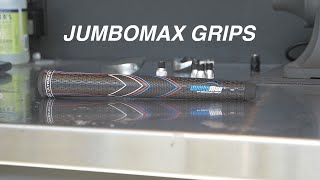 Test a range before rejecting a grip line
 Fit shaft weight and response, not material stigma
 Use shaft length to tune angle of attack and strike
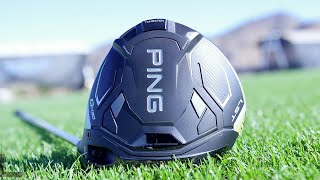 Expect more spin separation between Max and LST
 Choose putter grip through an individual fitting
 Do not let CPM tell the whole story
 Choose a square-face wedge for a simple baseline
 Account for shaft length and weight in speed tests
 Use shaft weight as a path influence, not a fix
 Combine hybrid-depth CG with an iron-type address look
 Include 50-yard shots in golf-ball testing
 Evaluate one-length irons in a full fitting
 Clean grass from the face before the next shot
 Understand lower-forward CG launch and spin
 Prioritize consistency over average speed
 Use your driver as a free speed trainer in the off-season
 Mark a string line to a target to set up square
 Why same-weight shafts feel different: balance point
 Test a driving-iron-first course plan
 Pick a 10-12 degree M or D grind for all conditions
 Check trajectory dispersion beyond averages
 Reserve full-toe wedges for specialty lofts
 Test a shaft instead of buying by online specs
 Use elastomer to soften wedge mishit feedback
 Punch shorter wedges through the wind
 Reduce toe hang when the putter pushes
- Test shaft profiles with the intended clubhead
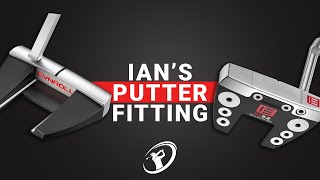 Match putter toe hang to your stroke's face rotation
 Recalibrate fundamentals weekly like tour pros
- Adapt clubs to physical constraints
 Build a 20-yard carry gap below driver
 Fit clubs little and often
- Check driver strike with foot spray on the face
 Exaggerate the transition before longer clubs
- Descent angle, not spin, is what stops the ball
 Gap a hybrid against the adjacent iron
 Long-drive players launch high to spin low
 Judge shaft behavior beyond its profile label
 Judge strong-lofted irons on launch, not spin
 Favor driver dispersion over occasional carry
 Balance wet-spin performance against wedge shape
 Practice speed control with an eyes-closed guess drill
 Use a 5-wood for protection on toe strikes
 Use a shorter 5-wood to chop out of the rough
- Keep the shaft if the new head improves dispersion
 Pick a shot shape to commit and predict your miss
 Read shaft thickness as a design-intent clue
 Expect wide weight placement to stabilize mishits
 Understand how a radial putter face compensates strikes
 Use ball choice to adjust iron spin by 400-500 rpm
 Spend on fitting to reduce the cost of a wrong club
- Old TaylorMade M4-M6 read fast on TrackMan
 Test a tied driver through rounds on the course
 Match the fitting ball to the golfer's usual ball
 Use your ears to read your wedge strike
 The five putter-fitting parameters in priority order
- Find the right grip size, don't just go bigger
 Use a mallet to frame the ball confidently
- Know your strike pattern in a driver fitting
 Consider a KBS C-Taper 130X as a putter shaft
 Bridge from a blade to a higher-inertia mallet