Bryson DeChambeau
88 verified teaching moments with direct channel credit and official-source links.
 Make five front-edge strikes in a row
 Find straight putts at the high and low points of the hole
 Miss to the easy up-and-down side
- Check that the ball line rolls end over end
 Rotate the putter grip to feel the face
 Play uphill, into-wind chips longer
- Eight-tee clock drill to learn how much putts break
- Pick the short-par-four risk
- Read the cup: fraying at the bottom shows downhill
 In over 5 mph wind, high shots lose 10-15 yards
- Practice on a two-sided range to face both winds
 Get fitted for grips, not just your clubs
 Feel your speed through impact, not the backswing
 Clip a tape line's front edge for ball-first strike
- Use 'sternum central' and 'extend the arm'
 Die a fast slope putt even when you need it
 Turn the clubhead over instead of holding it off
- Practice from the tournament layup spot
- Check the flags near the green, not just the nearest flag
- Match tournament practice to the course test
- Soft sand: open face, shallow, swing aggressive
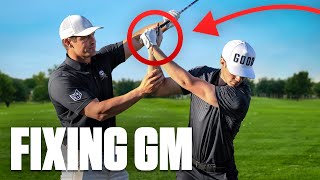 Keep a swing change only if it works immediately
- Commit to your read and think only back and through
 Fit your clubs before trusting familiar feels
 Land short-game shots closer on soft, slow greens
- Give yourself more time at the top before firing
- Hit multiple balls to diagnose a misjudged shot
- Respect water without steering scared
- Two-tee gate drill for center-face contact
 Hit it higher: ball up, swing up, loft the face
- Use more wedge loft for soft conditions
- Land short when chipping under limbs
- Breathe and use gratitude in pressure moments
- Don't grab the 60 for a 50-yard bunker shot
- Hands forward, drive right arm past left foot
 Compare iron spin before judging a golf ball
- Practice from the rough to learn club-turf interaction
- Walk a circle around the hole to find the straight putt
- Account for reduced curve when a ball flies shorter
- Draw a line in the sand to control low point
 Prioritize driver forgiveness at high speed
 Expect a ball-above-feet lie to go left
- Keep putter launch about 1.5 degrees, place ball late
 Play from the forward tees to sharpen scoring
- Take less loft to flight wedges lower into wind
- Separate body, swing, and ball control
- Practice putts over a chalk line on a flat spot
- Play a very hard course right before a tournament
- Tape a starting line to check start direction
- Fit driver face geometry to strike height
- Lower loft when excess spin costs ball speed
- Shape a big cut by opening the face
- Account for rental-shaft distance changes
- Account for leaves touching the ball
- Keep your butt against a cart to stay in posture
- Consider which side sees putts best
- Use the ridge top as the landing spot
- Track your low point on artificial grass
- Take enough club when short leaves no green
- Move the ball back for a low running draw
- Use the ground instead of picking for compression
- Hood the 60 to run a chip up firm greens
- Recognize what changes with an unfamiliar putter
- Use a limited ball set to train speed under pressure
- Match swing work to the player's base
- Play the forward tees to go low and learn your game
 Allow for dead contact from into-the-grain rough
- Initiate speed from the ground and rotate
- Club up to keep spin down in the wind
- Practice the putts that save rounds: 10-15 footers
- Read putt speed by watching the roll, then do the math
- Read uphill or downhill using level structures
- Putt when wet turf makes the wedge uncertain
- Practice the exact wedge shot the course demands
- Miss away from approach trouble
- Use the clock face to read putt break direction
- Compare wedge bounce for different turf
- Why a greenside bunker can beat the rough
- Lay up to protect an even-par score
- Compare golf balls with strike quality in view
- Read putts with maximum break at dripping speed
 Miss it on the safe side of a water hazard
- Test wedge rollout in wind and first-cut rough
- Reps-in-a-row benchmark for your handicap level
- Train driver speed with explosive light-load squats
- Fly wedges to the hole when greens won't release
- Play your hardest hole repeatedly to prep for a tournament
- Match driver CG to your hook bias